Research
Compassionate Schools Project
The Compassionate Schools Project (CSP) began as a partnership between the University of Virginia and the Jefferson County Public Schools with support from Louisville Metro Government and financial support from Philanthropic giving.
The evidence-based universal (Tier 1) Flourish curriculum was developed by University of Virginia faculty in the School of Education and Human Development and integrates social and personal competency, calming and focusing practices, movement, and other health skills to support the flourishing of students and schools. Elementary school students learn to cultivate focus, resilience, empathy, connection, and wellbeing as a basis for personal and academic success.
The Flourish curriculum was evaluated in a large, randomized control trial in 43 elementary schools in Jefferson County Public Schools in Louisville, KY. Students receiving the Flourish curriculum demonstrated improved attention/focus, social self-efficacy, and sense of peer support. Additionally, in CSP schools serving higher poverty communities, outcomes included improved prosocial behavior and social problem solving, and decreased conduct problems.
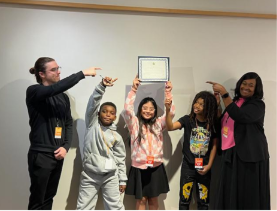
The Compassionate Schools Project: Randomized Control Trial
Promoting 21st Century Health and Wellness Skills in Elementary School Children: A Group Randomized Trial reports on a study that evaluated the Flourish curriculum in elementary schools through a group randomized trial.
Following are the key findings:
- Curriculum and Study Design: The Flourish curriculum for grades K-5 integrated Social and Emotional Learning (SEL) skills such as mindfulness, compassion, and physical awareness, with the goal of enhancing academic engagement, personal well-being, and student behavior. The study involved 45 elementary schools in Jefferson County Public Schools in Louisville, KY. Schools were randomly assigned to intervention group (using the Flourish curriculum) and comparison group (education as usual), with effects measured over two years of directed implementation and followed up for two additional years.
- Positive Outcomes: The study found positive effects on several SEL skills and behavioral indicators, particularly in schools serving high-poverty communities.
- Direct Effects: Students in the intervention schools showed improved attention control, social self-efficacy, and perceived peer support over time compared to those in control schools. These outcomes are significant as they are linked to long-term positive behavioral, academic, and social outcomes.
- Moderated Effects: In high-poverty schools, the curriculum was associated with improvements in social problem-solving, prosocial behavior, and reductions in conduct problems. These findings highlight the curriculum’s potential to promote resilience, particularly in more challenging school environments.
- Implementation and Sustainability: The curriculum was designed with attention to fitting within existing school systems, which facilitated its integration and sustainability. The study emphasizes the importance of aligning such interventions with school priorities and operational realities to ensure long-term success.
The study underscores the importance of SEL-focused curricula in promoting health and wellness in elementary school children, particularly in high-poverty areas, and offers insights into the design and implementation of sustainable school-based interventions.
Tolan, P. H., Harris, A. R., Burchinal, M., & Jennings, P. A. (2024). Promoting 21st century health and wellness skills in elementary school children: A group randomized trial. Prevention Science, 0123456789. https://doi.org/10.1007/s11121-024-01717-3
Related Publications
School-Based Mindfulness Program Review
The Compassionate School Project’s Flourish curriculum is included in a published review of 12 school-based mindfulness programs (SBMPs). Curricula chosen for inclusion in the review were available for download or purchase without proof of qualifications or paid training. Core curricular elements were scored for percentage of time devoted to mindfulness practices, skills, and knowledge conveyed.
All curricula included intrapersonal (individual) mindfulness practices (e.g., breathing practices) and cultivated intrapersonal mindfulness skills such as focused attention and emotion regulation.
Flourish was among eight curricula that included interpersonal (relational) mindfulness practices (e.g., compassion/kindness) and among 11 cultivating interpersonal mindfulness skills (e.g., social connection).
When compared to shorter programs, longer programs such as Flourish had a higher proportion of curricular elements focused on interpersonal mindfulness skills, particularly social connection and compassion/kindness. Longer programs also had a higher proportion of lessons cultivating interpersonal mindfulness knowledge, specifically empathy/perspective taking and social connection/interdependence.
Flourish was found to have the highest percentage of required curricular elements with breathing practices and required lessons focused on empathy/perspective taking. Flourish was among the top three curricula in the proportion of required lessons addressing social connection/interdependence and responsible decision making. Additionally, Flourish was one of three that included required lessons on conflict resolution and among the five that addressed brain science/neuroscience.
In general. longer programs such as Flourish were seen as more holistic, covering a broader range of skills, practices, and knowledge.
Doyle Fosco, S.L., Schussler, D.L. Unpacking the Black Box: Exploring Differences in Practices, Skills, and Knowledge Taught in School-Based Mindfulness Programs. Prevention Science 26, 827–838 (2025). https://doi.org/10.1007/s11121-025-01819-6
Our Partnership with Jefferson County Public Schools
Administration and Organization
PLANNING: University of Virginia’s Youth-Nex Center, Contemplative Sciences Center, and School of Education and Human Development, with support from Jefferson County Public Schools and the Louisville Metro City Government.
CURRICULUM: The development and publication of the Flourish curriculum is the result of a collaborative partnership between the University of Virginia’s Contemplative Sciences Center (CSC), Youth-Nex: The UVA Center to Promote Effective Youth Development in the School of Education and Human Development (EHD), and Pure Edge, Inc., with funding from: Hemera Foundation, Sonia Klein Jones, Pure Edge, Inc., and the Compassionate Schools Project, chaired by Owsley Brown III.
INSTRUCTION: Jefferson County Public Schools teachers with additional implementation coaches funded through the Compassionate Schools Project.
RESEARCH: University of Virginia’s Youth-Nex Center and School of Education and Human Development in partnership with Jefferson County Public Schools.
Jefferson County Public Schools
The Compassionate Schools Project (CSP) is designed to contribute to a healthy school climate that supports the wellbeing of all learners.
Dr. Marty Pollio, former Superintendent of the Jefferson County Public Schools (JCPS), believed the Compassionate Schools Project’s (CSP) health and wellness-centered social and emotional curriculum, Flourish, is a supportive component of the district’s “Prepared and Resilient Learner” core skills.
Dr. Brian Yearwood, current Superintendent of JCPS commented regarding the continuation of CSP, “Today our district is experiencing significant financial challenges and budget cuts. As we navigate these waters, we are steadfast in our commitment to supporting programs like the Compassionate Schools Project that make a lasting impact on the lives of children, particularly in schools serving communities most affected by trauma and economic hardship.”
University of Virginia
Contemplative Sciences Center, Youth-Nex Center, and School of Education and Human Development
The University of Virginia has a world-class school of education, and two innovative centers that partnered, to bring the best mix of scientific and educational skills to the design, implementation, and evaluation of the curriculum. This unique mix of expertise and extensive experience in school- related innovation and research is behind the university’s strong commitment to this initiative.
The School of Education and Human Development discovers and advances knowledge, creates innovative proven practices, and facilitates educational change. The mission of The University of Virginia’s Contemplative Sciences Center is to fuse contemplation, connection, and research to enhance flourishing. The Youth-Nex Center focuses on developing and applying rigorous scientific methods to achieve the best understanding of what helps children develop successfully.
Louisville
At the beginning of the study, Louisville Metro Government asserted, that if residents can recognize, celebrate, and act upon their interconnectedness, they can unleash hidden potential already in the city, and do so in a transformative and lasting way. Louisville has set about weaving compassion into many facets of the city through government action and by working with nonprofits and volunteers. The public response continues to be positive.
Advisory Board

Richard J. Davidson, Ph.D.
William James and Vilas Professor of Psychology and Psychiatry at the University of Wisconsin, Director of the Waisman Laboratory for Brain Imaging and Behavior, Director of the Laboratory for Affective Neuroscience, Founder and Chair of the Center for Investigating Healthy Minds; Published books include The Emotional Life of Your Brain.

James Doty, M.D.
Clinical Professor of Neurosurgery at Stanford University, Founder and Director of the Center for Compassion and Altruism Research and Education.
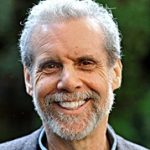
Daniel Goleman, Ph.D.
Psychologist, Science journalist and author of the New York Times bestseller Emotional Intelligence and Social Intelligence: The New Science of Human Relationships.

Denise Gottfredson, Ph.D.
Professor Emeritus of Criminal Justice and Criminology in the College of Behavioral and Social Sciences at the University of Maryland.

Mark Greenberg, Ph.D.
Edna Peterson Bennett Endowed Chair in Prevention Research and Professor of Human Development and Family Studies and Psychology at Pennsylvania State University, Founding Director of the Bennett Pierce Prevention Research Center.

Larry V. Hedges, Ph.D.
Board of Trustees Professor of Statistics, Education, and Social Policy and Professor of Psychology at Northwestern University, Director of the Center for Improving Methods for Quantitative Policy Research at the Institute for Policy Research.

Gilbert Liu, M.D.
Director for the Division of General Pediatrics, Associate Director for the Child and Adolescent Health Research Design and Support (CAHRDS) Unit, Founding Director for the Kentucky Pediatric Alliance to Transform Children’s Healthcare (KPATCH) at the University of Louisville School of Medicine.

John Makransky, Ph.D.
Associate Professor of Buddhism and Comparative Theology at Boston College and co-founder and guiding contemplative teacher for the Courage of Care Collective and the Foundation for Active Compassion.
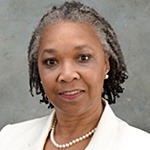
Velma Murry, Ph.D.
Betts Chair in Education and Human Development, Professor of Human and Organizational Development, Director, Center for Research on Rural Families and Communities, Peabody College, Vanderbilt University.
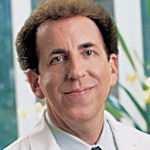
Dean Ornish, M.D.
Clinical Professor of Medicine at the University of California, San Francisco, President and Founder of the Preventive Medicine Research Institute; appointed by President Clinton to the White House Commission on Complementary and Alternative Medicine Policy and by President Obam

Kimberly Schonert-Reichl, Ph.D.
Professor of Human Development, Learning, and Culture in the Faculty of Education, University of British Columbia (UBC). Director of the Human Early Learning Partnership, School of Population and Public Health in the Faculty of Medicine, University of British Columbia.